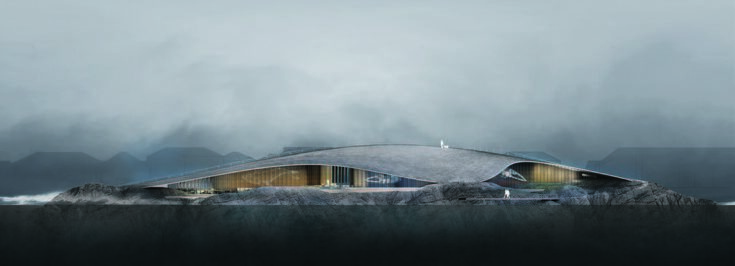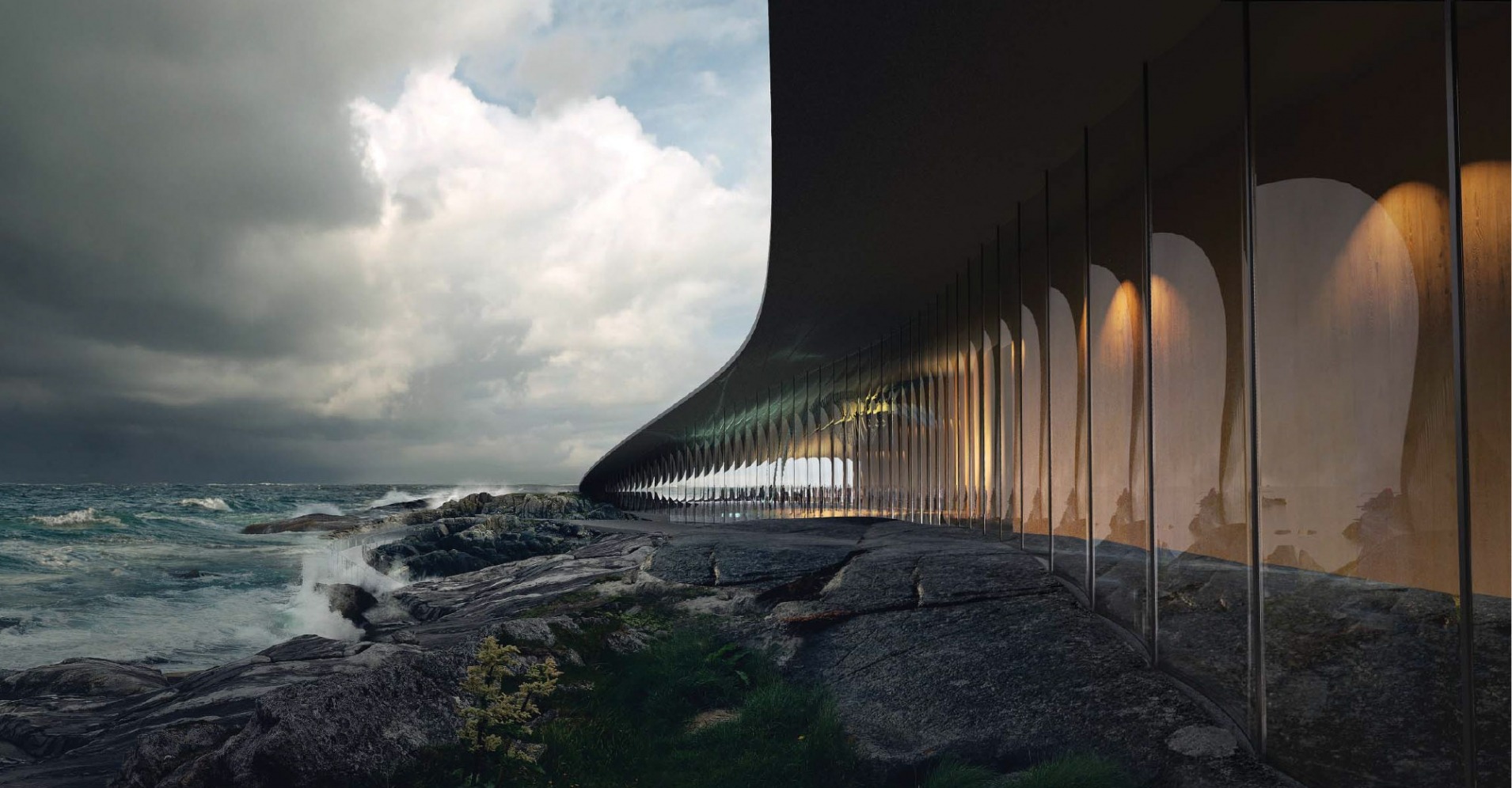
The Whale is a new whale observation attraction currently under construction in Andenes, a fishing village on the island of Andøya in northern Norway, 300 km above the Arctic Circle. Designed by Dorte Mandrup following an international competition for client HENT AS, the building rises like a hill from the landscape: a parabolic roof – largely covered with meadow and peat, with stone and slate walkways – mirroring the surrounding terrain, and beneath it a wide, column-free glazed hall facing the Atlantic Ocean – one of the world’s foremost whale-watching locations. The attraction is due to open in June 2027. Staticus is responsible for the design, production, and installation of the 1,537 m² aluminium and glass façade, including 590 m² of soffit.
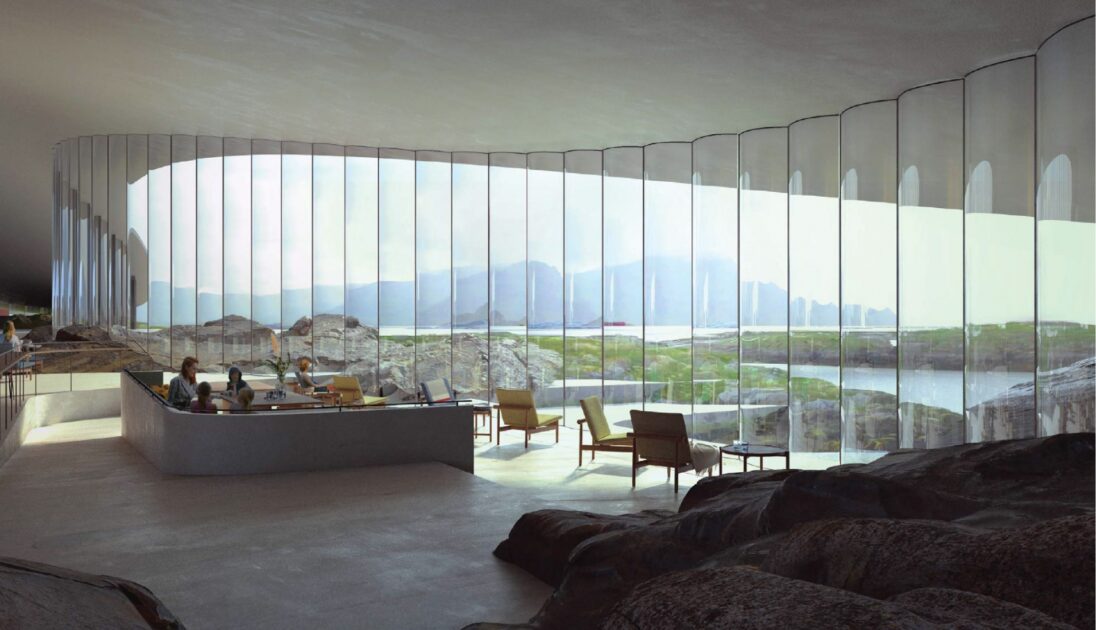
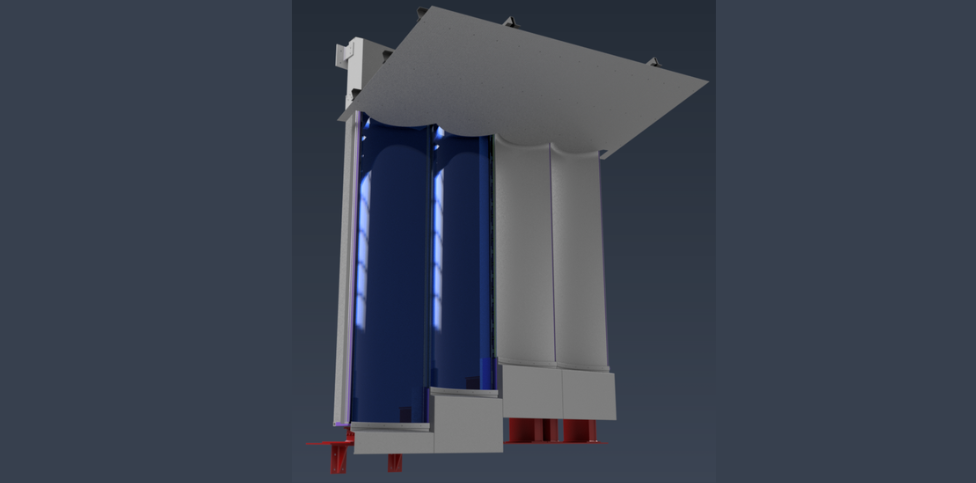
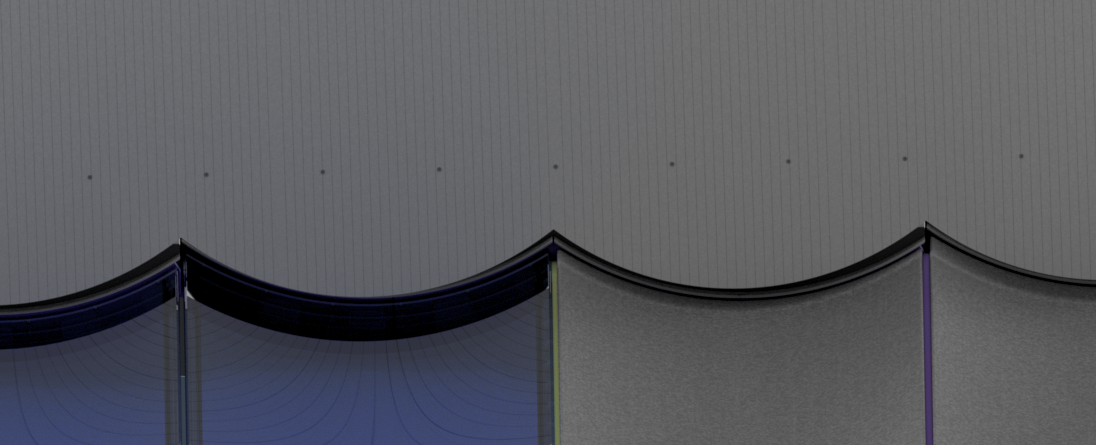
The façade is designed to read as a single, flowing surface. Each of the 137 glass panes is individually bent to follow the wave contour of the building, with no visible vertical profiles anywhere on the face, adjacent panes are bonded and sealed edge to edge. Three engineering challenges run through the entire project: keeping the glass optically clear despite bending, holding consistent geometry across all 137 units, and coordinating every interface so the wave reads continuously from glazing through to soffit and cladding.
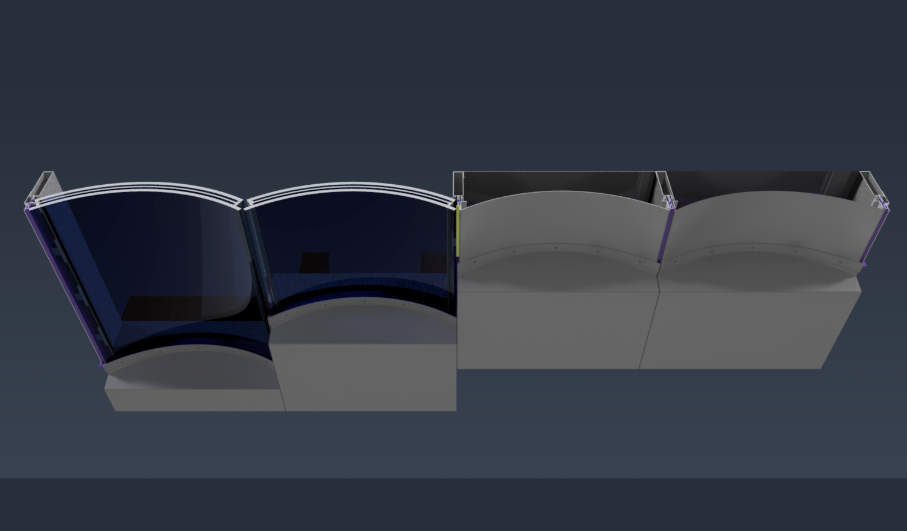
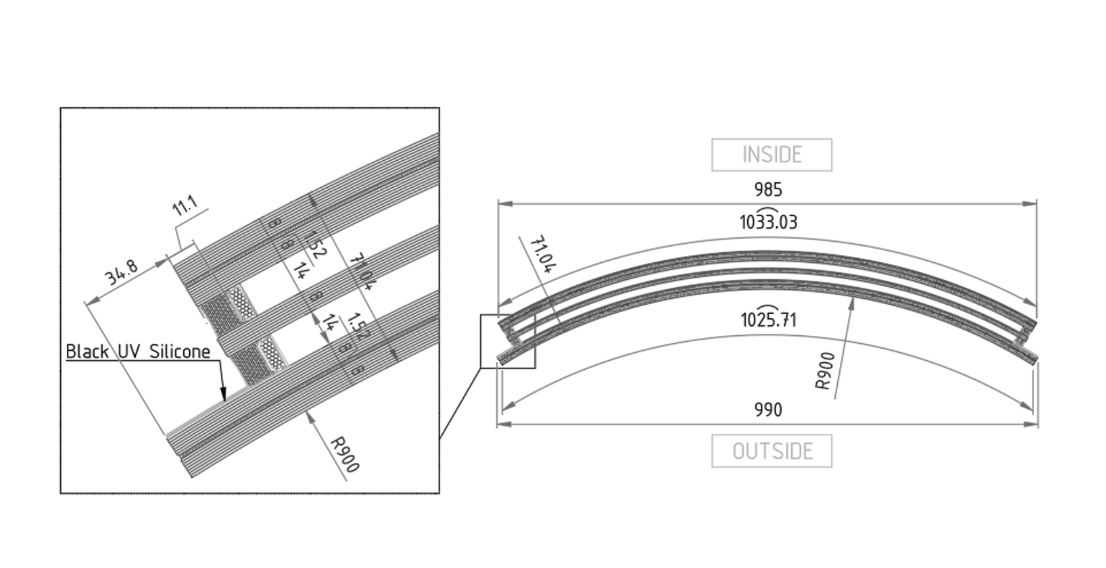
Challenge 1: Keeping bent glass optically clear
With a façade conceived entirely around uninterrupted views and clean reflections, optical distortion is not a cosmetic problem, it is a project failure. Curved glass amplifies the risk: even small surface irregularities introduced during bending become visible as waviness, broken reflection lines, or image distortion that the eye catches immediately.
The standard engineering response to curved glass under structural load is to specify heat-strengthened or tempered glass. But thermal processing is itself a source of optical distortion, the heating and quenching cycle introduces surface waves and irregularities that would be immediately apparent on The Whale’s façade. Staticus resolved this by taking a different route: increasing glass thickness and verifying structural adequacy through detailed calculations, so all 137 curved units can be specified as annealed glass with no thermal processing. Annealed glass, cold-bent to shape, preserves the optical clarity the design requires.
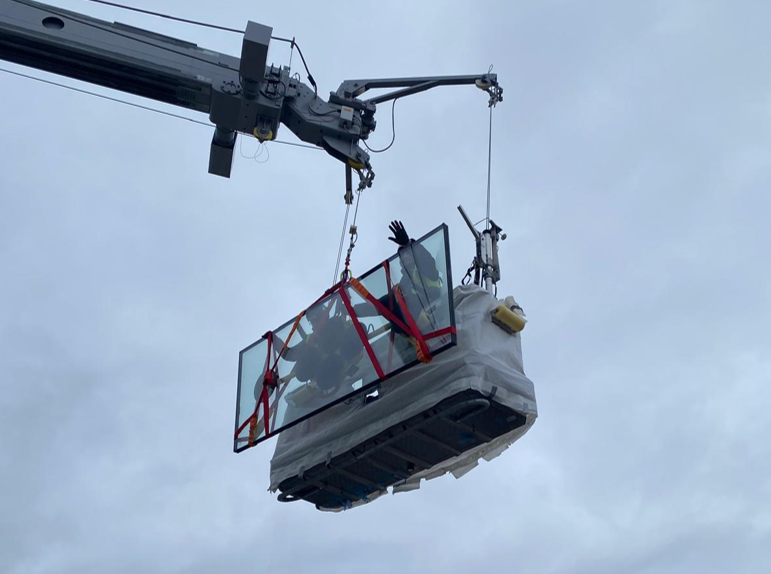
Before committing all 137 units to production, a physical mock-up was built and reviewed under real viewing conditions. The result confirmed the specification: the curved glass produces no visible distortion of the view or of reflections. This was a tested baseline against which all production units are now accepted.
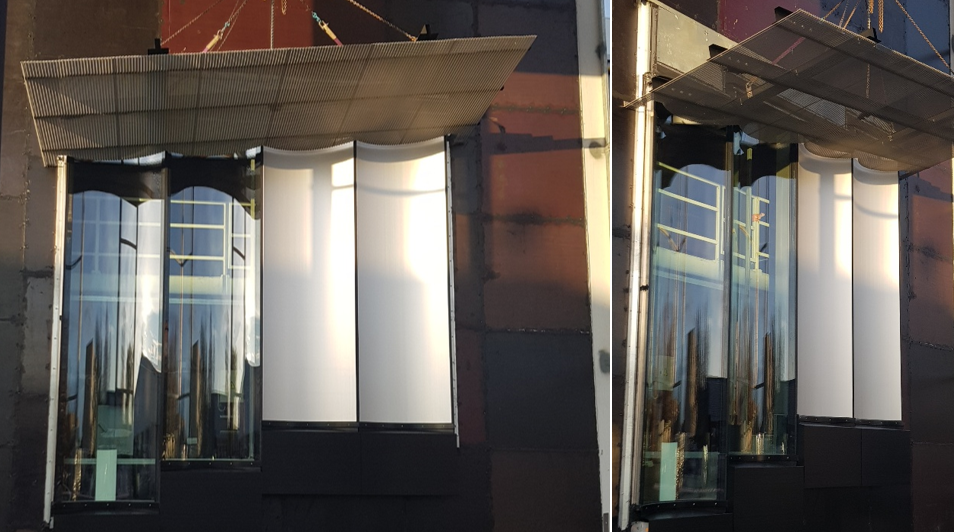
Challenge 2: Holding consistent geometry across 137 units
Producing one optically acceptable curved pane is a different problem from producing 137 of them consistently. The design includes panes up to 6 metres long, each bent to its own radius along the wave profile. Variation in bending radius, edge geometry, or overall dimensions accumulates across the set and because the façade uses a stick system with glass fixed only at top and bottom, with no vertical profiles to absorb misalignment, every unit has to arrive within tolerance. There is no way to compensate on site.
The response is a precision-led fabrication approach. Where cold-bending is not sufficient, components are CNC-milled from flat plates and assembled as modular elements, eliminating the dimensional variability that forming introduces. The glass manufacturer has been assessed through physical samples reviewed against three fixed criteria – bending radius accuracy, surface finish, and colour consistency – before any production units are committed.
Quality control is structured at unit level. A separate QA form is applied to each of the 137 panes, with checks covering curvature conformity, interface geometry, and joint alignment against agreed tolerances. The same criteria that govern production acceptance will govern site acceptance, so there are no surprises at handover.
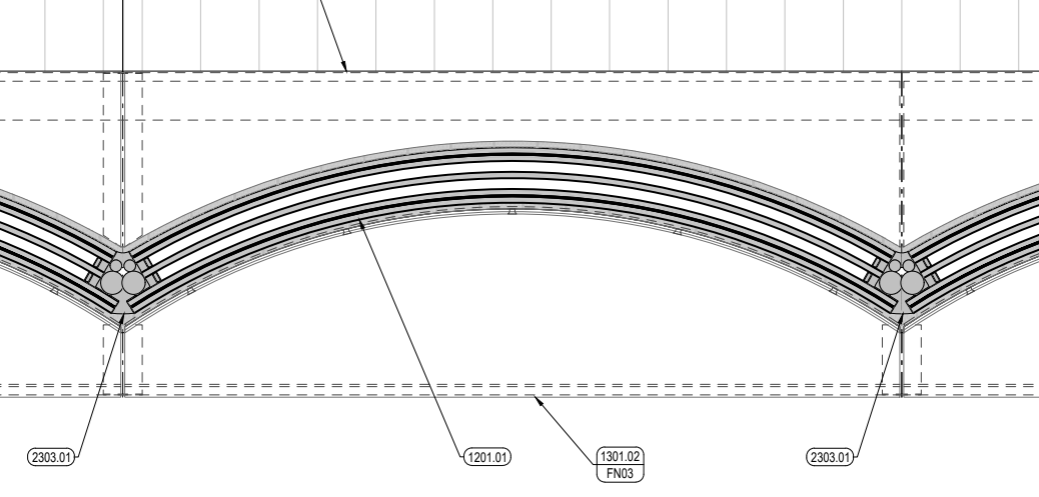
Challenge 3: Keeping the wave continuous across every interface
The wave does not stop at the glass. Curved anodised aluminium cladding, a continuous soffit, and door zones all must read as part of the same flowing surface. Each interface is a potential point where the geometry breaks – a cassette that does not align with the glazing, a soffit panel cut to the wrong profile, or a door zone that interrupts the rhythm.
Staticus is coordinating all of these elements in parallel during design, even where it is not manufacturing them directly. Aluminium cladding cassette geometry is being developed to align with the glazing. Door zones are resolved pragmatically: operable elements remain flat where function requires it, but the surrounding curved visual elements are designed and clad to preserve the façade rhythm across the opening. Soffit and ceiling geometry is coordinated element by element against the wave profile, with positioning and cutting logic fully resolved in drawings before any site work begins, so execution follows precise instructions rather than field judgement.
What this means for installation
With the façade now in production, the three challenges described above have been resolved in design rather than deferred to site. The issues that most commonly cause disruption on curved-glass projects – optical defects discovered after installation, units that do not fit together consistently, and interface geometry that requires rework – have each been addressed before they can surface. Installation will proceed against acceptance criteria already proven at mock-up, with tolerances defined and verified through production QA. The goal is a handover where the façade performs exactly as designed, and The Whale opens in June 2027 as the building its architects and client intended.