Buildings are under growing pressure to cut embodied carbon, yet façades remain a significant contributors to a building’s carbon footprint. Timber-hybrid systems offer a way to reduce that footprint – but they have faced a recurring question from fire engineers, developers and approving authorities: can they actually meet the fire performance required for commercial buildings?
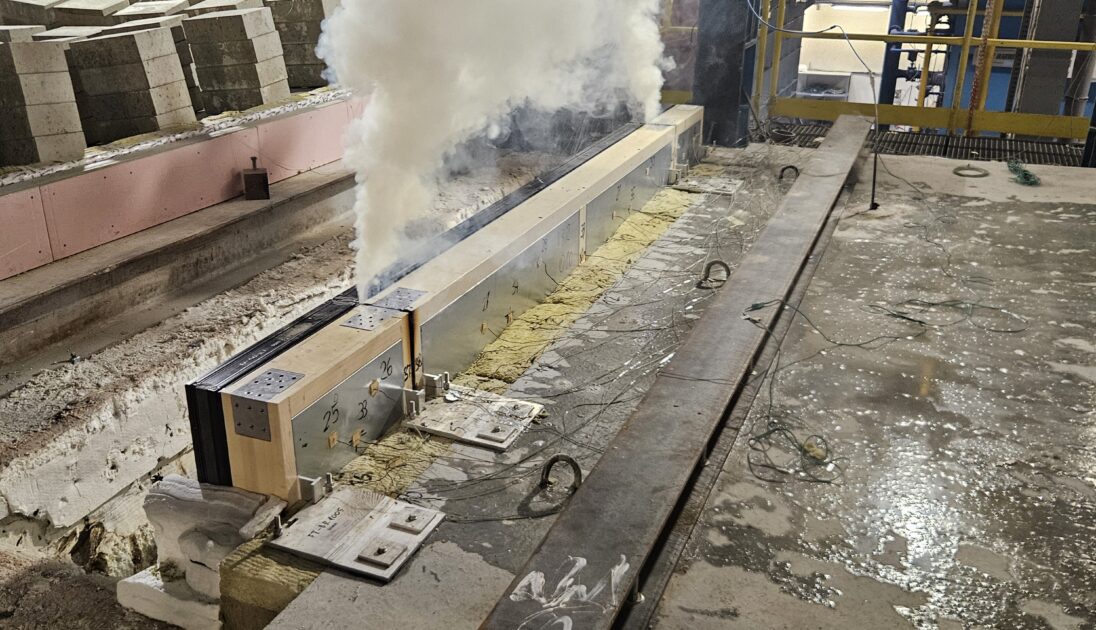
In April 2026, we tested the perimeter seal of our Hybrid Unitised Façade (HUF80 B) – a timber-aluminium system built to cut embodied carbon while matching the performance of a regular aluminium façade following independent fire resistance testing the system. The result is now classified and available to project teams.
The result: EI 90, classified by an EU Notified Body
The perimeter seal of HUF80 B achieved a fire-resistance classification of EI 90 – maintaining both integrity (E) and thermal insulation (I) against fire for 90 minutes. The test was carried out to EN 1364-4:2014 and classified in accordance with EN 13501-2:2023 by the ITB Fire Testing Laboratory in Pionki, Poland (EU Notified Body No. 1488). Because ITB is a Notified Body, the classification carries full standing across European markets.
What we tested, and why the perimeter seal
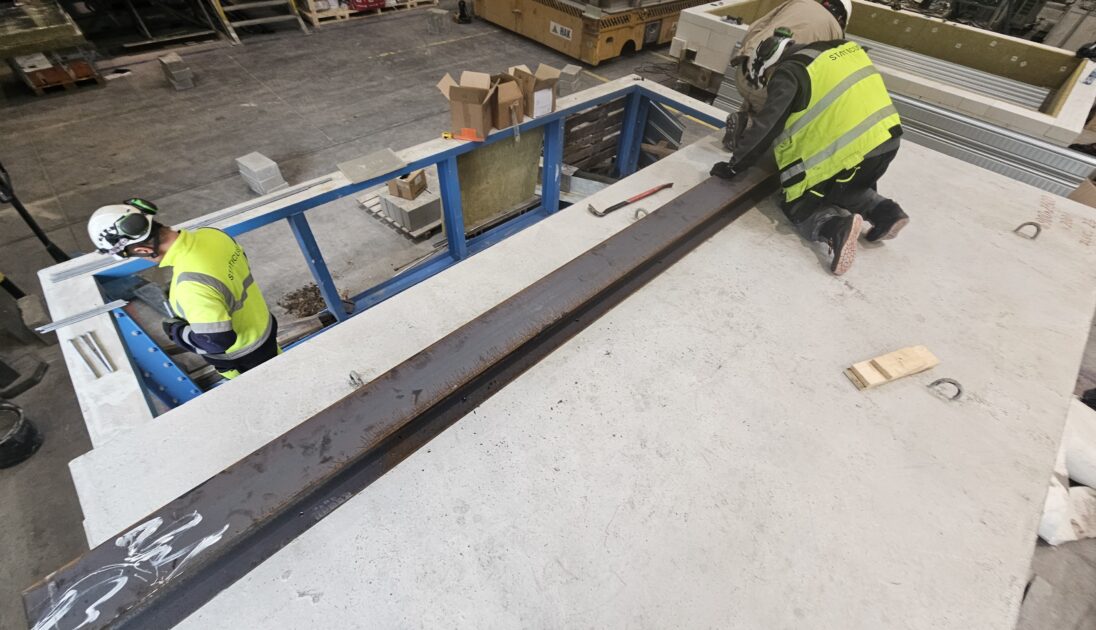
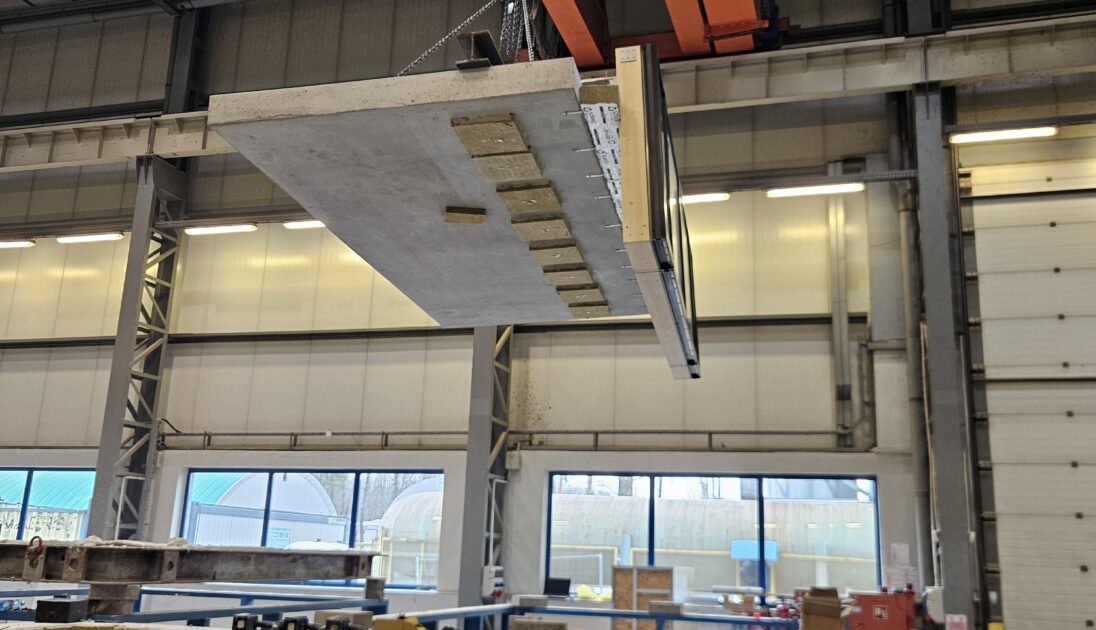
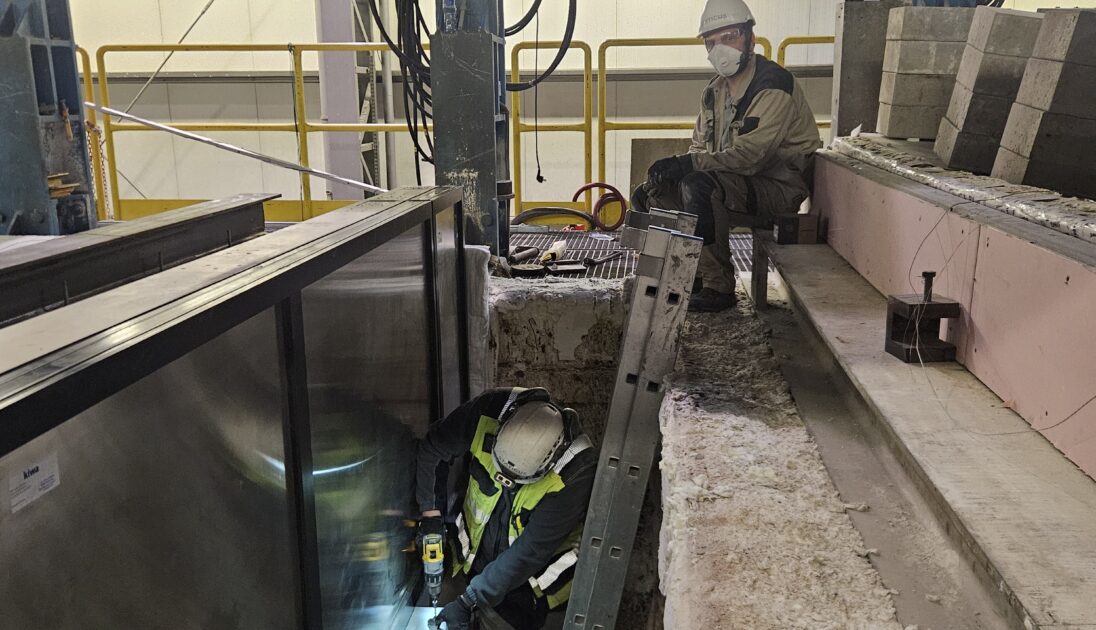
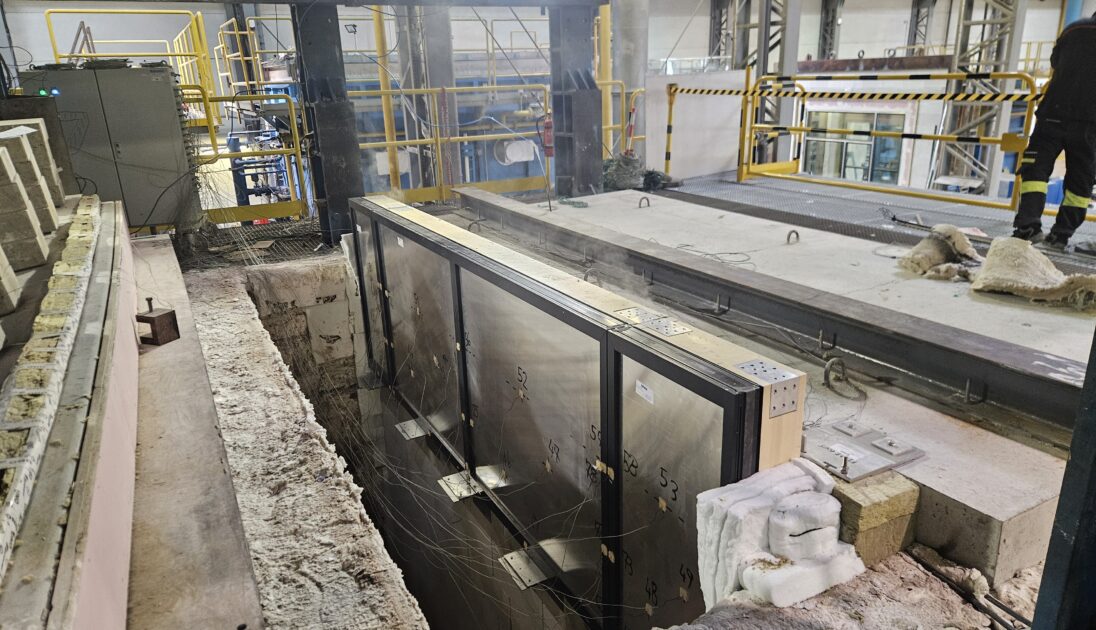
We tested the façade perimeter seal – the junction between the spandrel panel and the reinforced concrete floor, because it is where a hybrid system faces the toughest scrutiny. Under fire, it must stop flame and hot gases from bridging one floor to the next while the surrounding structure moves. This is the detail fire engineers question first, so it is the one we chose to classify first. In the test, the seal held well beyond the class it certifies to: integrity was maintained for 121 minutes (gap gauge and sustained-flaming checks) and 115 minutes (cotton-pad check), and insulation for 114 minutes.In practice, the seal performed to roughly two hours.
A direct comparison with aluminium
We also tested the equivalent all-aluminium version of the same detail, side by side; it achieved EI 120. The hybrid system sits one class below aluminium, and EI 90 satisfies a large share of commercial fire-resistance requirements, which are set by building height and use (commonly 30, 60, 90 or 120 minutes). For the many projects that require 90 minutes, HUF80 B now has an independently classified answer.
The test at a glance
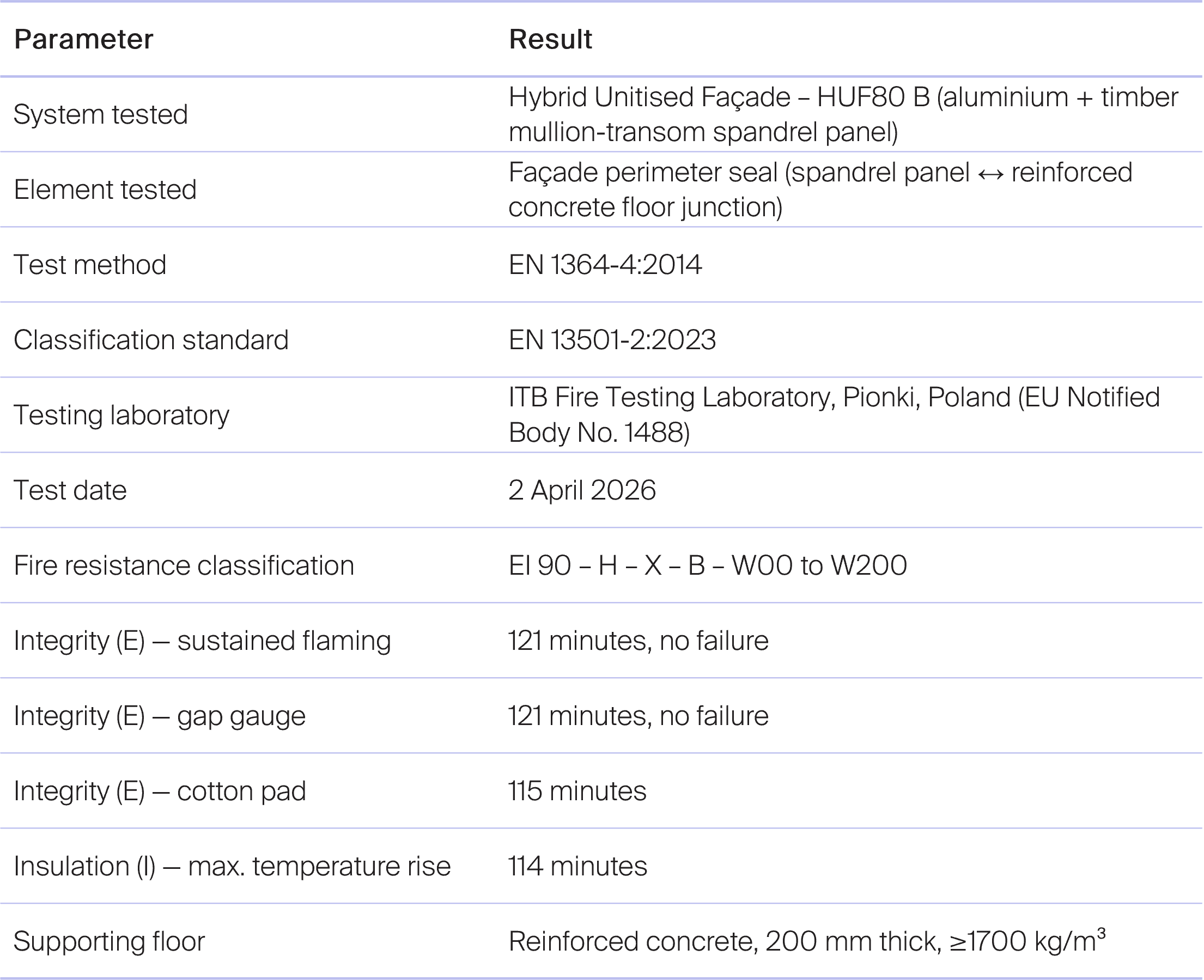
Full classification code: EI 90 – H – X – B – W00 to W200 (W00–W200 denotes the tested seal-width range).
Hybrid Unitised Façade – a sustainable façade solution for low-carbon projects in Europe
Fire resistance is one of the key gating criteria fire engineers and approving authorities assess before accepting a hybrid or timber-based system on a project. With this classification in hand, Staticus is better placed to bring HUF into high-regulatory markets, including the UK, where it can be evaluated against project-specific requirements.
HUF80 B already cuts embodied carbon by up to 70% compared with a regular aluminium frame – an important figure that matters increasingly at planning stage, in ESG reporting, and in EU Taxonomy or BREEAM assessments. The testing result confirms that the sustainability gain does not come at the expense of fire and safety performance.
The result carries the weight of a Notified Body assessment under EN 13501-2, it carries the official standing of an independent, third-party assessment – evidence that can be relied on directly in tender submissions, fire strategy documentation, and Building Control reviews.
HUF enables project teams to reduce embodied carbon while meeting demanding fire performance requirements.